When a big dog starts slowing down, the whole household feels it.
A 75-pound dog can't simply be scooped up when the stairs get hard. You notice the rear legs losing power. The hesitation at the car. The slipping on hardwood. And eventually you're calculating whether you can physically help them every time they need it.
Mobility matters differently when your best friend weighs as much as a person.
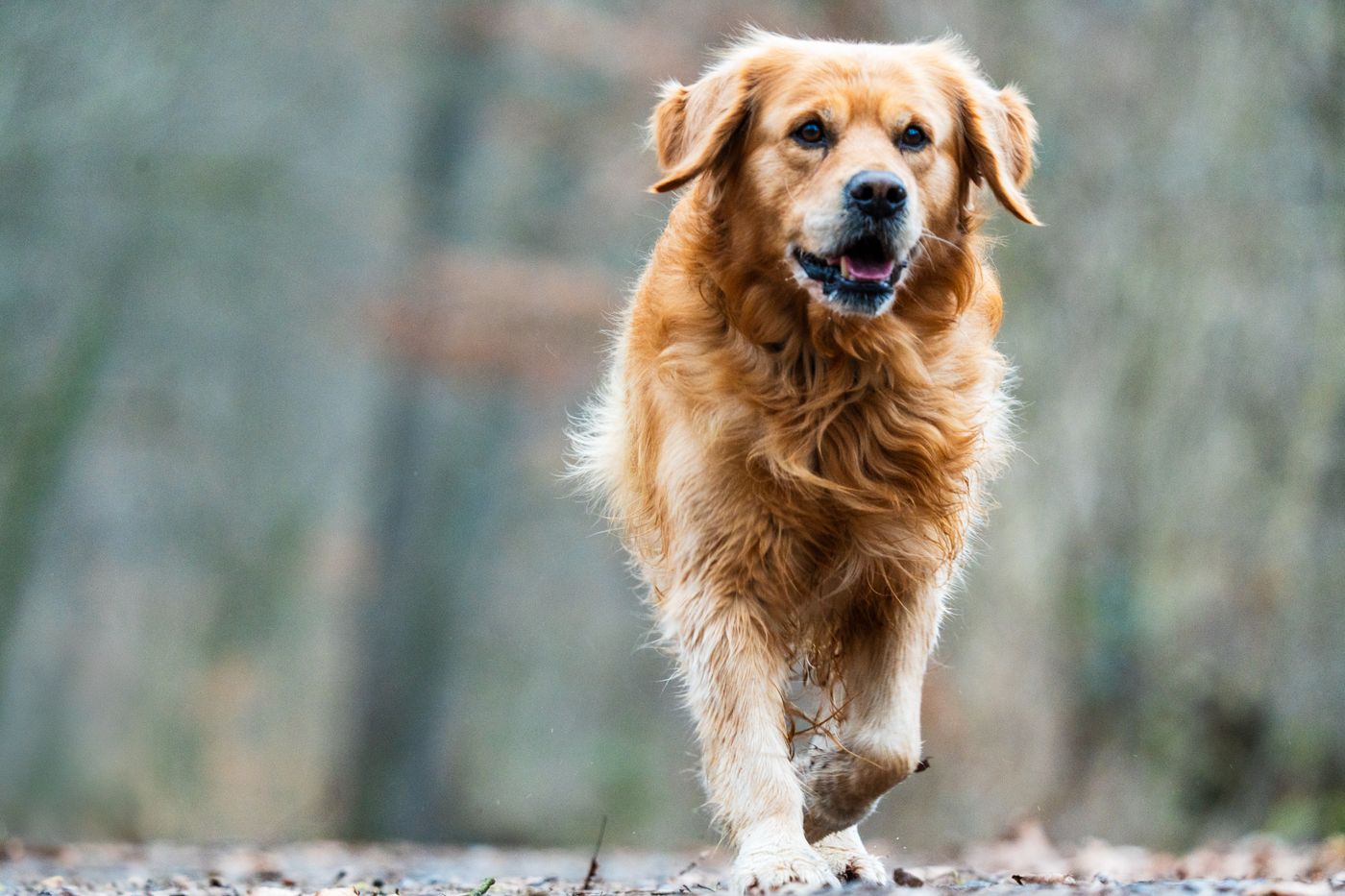
The problem becomes obvious long before the vocabulary does.
Large-dog owners tend to describe logistics: lifting, stairs, ramps, rear-leg support, getting into vehicles, and whether the dog can still manage normal household movement.
The Great Dane that used to fly upstairs suddenly thinks about every step. The change can start subtle.
You open the hatch and wait. They size it up. Eventually you buy stairs, a ramp, or start helping from behind.
Less muscle. More effort standing. More splaying or slipping. More reliance on the front end.
A dog who looks okay outside may struggle badly on smooth indoor surfaces.
Supporting the hips. Lifting into the SUV. Helping them stand. Wondering how long your own back can keep doing it.
With a big dog, keeping them independent is not only about their quality of life. It's what makes daily care physically possible.
When a 90-pound dog loses 20% of their mobility, you don't lose 20% of your routine. You may lose the stairs, the car, the long walk, the bed, and the ability to move them safely.
You have already seen every generic hip and joint product on the shelf.
They need someone who understands the day-to-day mechanics of caring for a big dog whose hips, knees, elbows, spine, or rear-end strength are changing.
Labs, Goldens, Shepherds, Rottweilers and giant breeds create obvious niches.
Breed communities are highly identifiable, emotionally engaged, and already trade recommendations for ramps, rehab, supplements, medications, braces, surgery, and mobility aids.
The job is independence.
Owners want their dog to rise, walk, turn, climb, toilet, and get around with less physical assistance from the human.
Measure the things that actually make life easier.
The veterinary plan starts with diagnosis and current care, then evaluates whether peptide protocols belong alongside the other tools being used.
Map the mobility problem
Rear-end weakness? Hip or elbow disease? Arthritis? Post-injury decline? Trouble rising? A vet needs the pattern, not just “my dog is stiff.”
Build around the whole dog
Weight, muscle condition, medications, rehab, activity, home setup, orthopedic history, and any peptide protocol are considered together.
Track independence
How much help does your dog need to stand, walk, navigate floors, take stairs, or get into the vehicle? Those changes matter.
For a big dog, “needs a little help” is measurable.
Track the moments where size turns mobility loss into a household problem. Repeat the same baseline at weeks 2, 4 and 6.
- Can they rise without you lifting the rear end?
- Can they manage the stairs safely?
- Can they get into the car without a lift?
- How long can they comfortably walk before slowing?
Use the same floor, route and car setup each time so the comparison means something. Nothing entered here is transmitted or stored.
Weight turns a small mobility problem into a daily logistics problem.
Ramps, harnesses, orthopedic beds, supplements, medications, rehabilitation and surgical care are already part of the conversation. A vet-guided regenerative-medicine option enters an existing behavior: “What else can I do to keep this dog moving?”
The positioning
Mobility medicine for dogs too big to carry.
It's specific, visual, instantly understandable, and it turns “large breed” from a demographic into a real problem statement.
The expansion opportunity
This audience can later branch into breed-specific education and acquisition: Labs, Goldens, German Shepherds, Rottweilers, Great Danes, Mastiffs, Bernese Mountain Dogs and other large/giant breeds.
The peptide is only one part of the product.
Dog Peptides is being built around the practical problems owners run into when they try to adapt a human research product for a dog: weight-based planning, formulation questions, batch confidence, veterinarian communication, and knowing whether anything actually changed.
The right amount for your dog
Worked out for their weight and situation, so you are never doing the maths.
You can see what is in it
Every batch is tested and the results are yours to read.
Something to hand your vet
A one page summary your own vet can read in a minute.
A six-week outcome log
Track function before starting and again at weeks 2, 4 and 6 so “I think they seem better” becomes something more concrete.
What peptide care can be here for. And what it cannot.
Trust goes up when the ceiling is as clear as the promise.
What we're building it to do
- Support a veterinarian-guided mobility plan built around the actual joint, diagnosis, body size and current medications.
- Track whether the dog needs less help with the specific movements that matter in a large body.
- Make this easy to talk through with your own vet.
What we're not claiming
- Reshape a dysplastic hip, correct a structural deformity, or turn a dog who needs surgery into a dog who no longer needs it.
- That one protocol is right for every dog.
- That “more good years” means pretending age, anatomy or the underlying diagnosis do not exist.
What people ask us about big dogs.
Where are you having to help?
That question often tells us more than “does your dog have arthritis?”
- Standing up?
- Stairs?
- Getting into the car?
- Slippery floors?
- Finishing normal walks?
The goal isn't just more movement. It's less help needed from you.
Tell us where mobility is breaking down in daily life.