The injury happens in a moment. Then recovery takes over your life.
Yesterday your dog was running. Now you're thinking about leash-only bathroom breaks, slippery floors, muscle loss, whether they're using the leg enough, whether they're using it too much, and whether one wrong move could set everything back.
That is what the weeks after a cruciate injury actually feel like. A good plan makes the next step clearer.
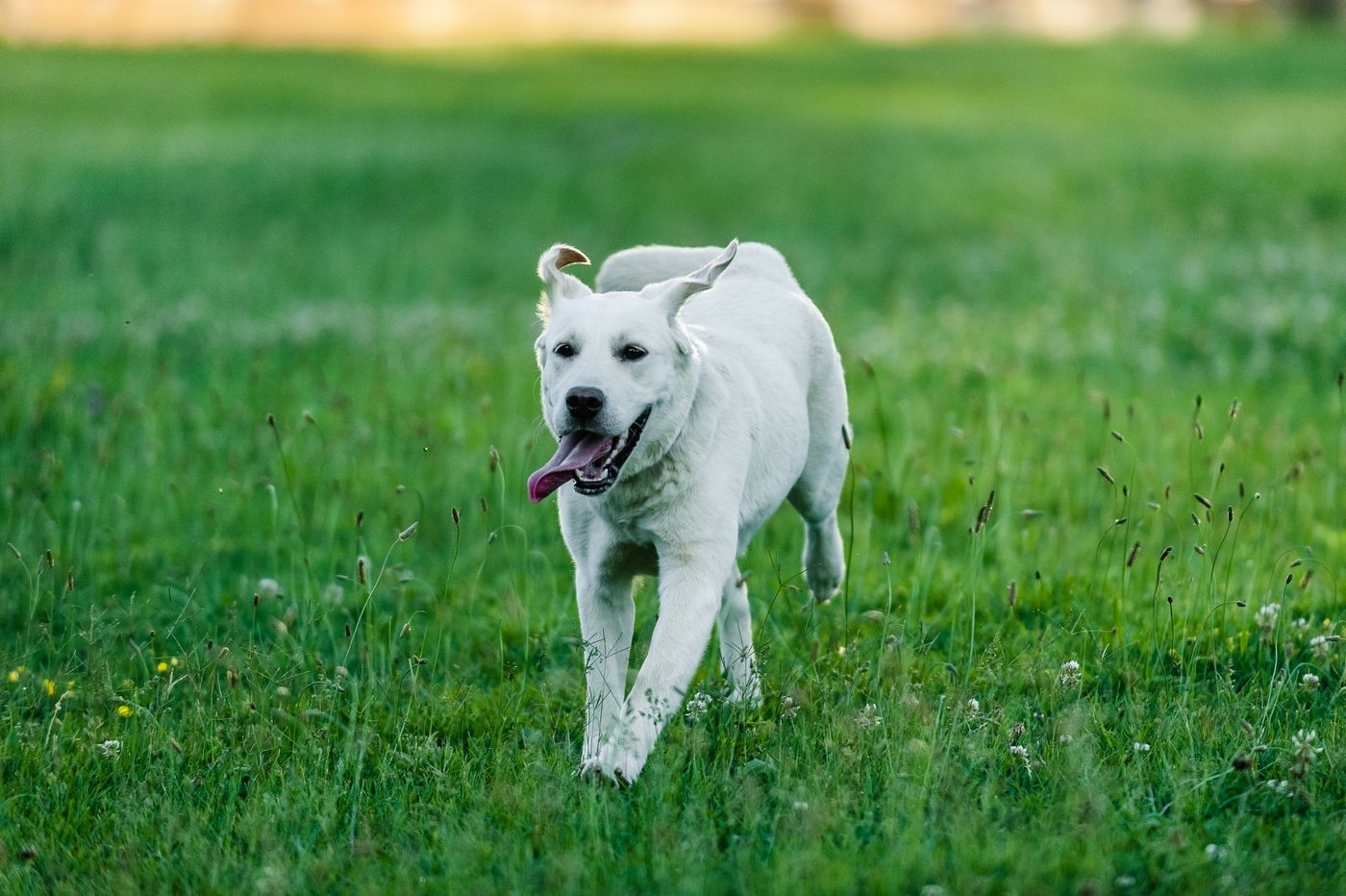
You become a full-time recovery manager overnight.
You are not shopping for “joint health” at this point. They're trying to get one specific dog safely from injured to functional.
A limp becomes a diagnosis, a surgical consult and a completely changed routine, all before you have caught up with it.
Every step becomes data. Owners compare day 3 to day 7 to week 4 and worry about being behind.
A sudden burst of energy, a jump on the couch, or a slip on the floor can feel like a potential disaster.
Owners see deconditioning happen in real time and start thinking about rehab, strength, and return to activity.
The goal is not simply a healed incision. It's normal walks, stairs, play, work, sport, or whatever “normal” means for that dog.
This is the exact moment owners become unusually open to rehab, supplements, regenerative options, devices, and vet-guided peptide conversations.
There is a diagnosis, a timeline, a visible loss of function, a large existing veterinary spend, and a human who is actively searching for ways to improve the recovery process.
The need is acute, not theoretical.
You do not need convincing that something is wrong. You watched it happen. Their dog's routine already changed.
You know exactly what your dog could do a month ago.
They know what normal looked like: stairs, walks, running, agility, hiking, jumping into the car. That creates natural outcome tracking.
They're already coordinating multiple interventions.
Surgery, pain control, restricted activity, rehab, home modifications, follow-up imaging or exams, supplements and recovery tools can all coexist. Peptide care has to fit into that system.
Where are you in the CCL journey?
The best landing-page segmentation here is temporal. Someone diagnosed yesterday has different questions from someone six weeks after TPLO who thinks recovery is stalling.
New diagnosis / deciding what comes next
Understand the injury, the veterinary plan, and whether there's a reason to discuss additional recovery support before treatment or surgery.
Early post-op recovery
Coordinate any additional support with the operating veterinarian's restrictions, medications, wound healing, activity plan, and follow-up schedule.
Rehab / return to function
Track leg use, muscle, gait, walking tolerance, rehab progression, and the path back toward the dog's normal activity level.
In CCL recovery, every week already feels like a report card.
Make the tracking useful instead of obsessive. Follow the same functional measures your veterinary team cares about and compare them on a consistent schedule.
- Comfortable weight-bearing / leg use
- Walking tolerance within the prescribed activity plan
- Sit-to-stand quality and confidence
- Muscle and gait observations
- A short video from the same angle for comparison
This tracker does not replace the surgeon or rehab team's progression criteria. Nothing entered here is transmitted or stored.
Not instead of the orthopedic plan. Inside the recovery plan.
The commercial opportunity is strongest when the product isn't positioned as an alternative to veterinary treatment. This is for the point where you have done everything the surgeon asked and you are still wondering what else might help.
The core message
Your surgeon handles the knee. We help you explore the recovery-support conversation.
That keeps the page aligned with the owner's actual intent rather than forcing them into an anti-surgery / pro-peptide binary.
The best acquisition moments
Immediately after diagnosis, while researching TPLO, in the first post-op weeks, when muscle loss becomes obvious and recovery feels slower than you expected.
The peptide is only one part of the product.
Dog Peptides is being built around the practical problems owners run into when they try to adapt a human research product for a dog: weight-based planning, formulation questions, batch confidence, veterinarian communication, and knowing whether anything actually changed.
The right amount for your dog
Worked out for their weight and situation, so you are never doing the maths.
You can see what is in it
Every batch is tested and the results are yours to read.
Something to hand your vet
A one page summary your own vet can read in a minute.
A six-week outcome log
Track function before starting and again at weeks 2, 4 and 6 so “I think they seem better” becomes something more concrete.
What peptide care can be here for. And what it cannot.
Trust goes up when the ceiling is as clear as the promise.
What we're building it to do
- Sit inside a veterinarian-directed recovery plan as an additional recovery-support conversation.
- Give the owner and clinical team a more consistent picture of function across the recovery timeline.
- Make this easy to talk through with your own vet.
What we're not claiming
- Replace TPLO or another indicated procedure, override post-op restrictions, or substitute for rehab and follow-up care.
- That one protocol is right for every dog.
- That “more good years” means pretending age, anatomy or the underlying diagnosis do not exist.
The CCL questions underneath the peptide question.
Where are you right now?
The first question isn't “which peptide?” It's what happened, what your veterinarian has recommended, and what stage of recovery your dog is in.
- New diagnosis?
- Surgery scheduled?
- Recently post-op?
- Rehabbing now?
- Recovery feels stalled?
What stage are you in, and what are you most worried isn't going right?
That's where the veterinary conversation should start.